Chevy 5.3 Head Bolt Torque Sequence by Engine Generation
Chevy 5.3 Head Bolt Torque Sequence by Engine Generation with application boundaries, staged installation guidance.
For the covered 2005 Silverado 5.3L VIN Z, install new bolts; tighten M11 bolts 1–10 to 22 lb-ft, then 90°, then 70°. Tighten M8 bolts 11–15 to 22 lb-ft from the center outward.
For the covered 2005 Silverado 5.3L VIN Z, install new bolts; tighten M11 bolts 1–10 to 22 lb-ft, then 90°, then 70°. Tighten M8 bolts 11–15 to 22 lb-ft from the center outward.
This chart is for the documented 2005 Gen III 5.3L VIN Z application. First-design long/medium-bolt engines, later Gen IV and Gen V EcoTec3 engines, and aftermarket studs require their own procedures.
Use an angle meter and the factory numbered sequence. Bolt length and block design must be established before parts are ordered or angles are applied.
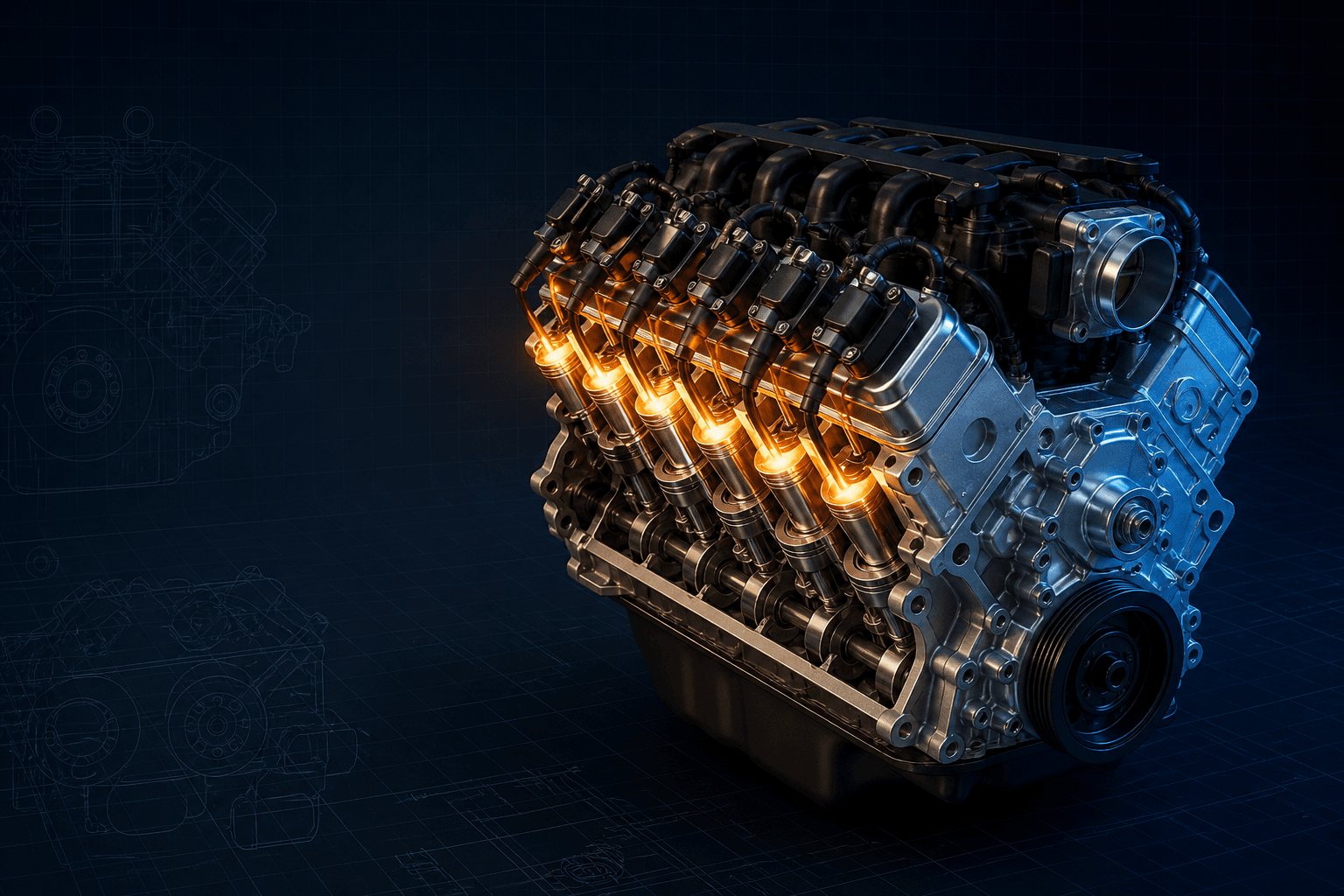
Interactive 2005 Silverado 5.3L VIN Z V8 head service map
Branded downloads includedPNG and PDF exports carry the TorqueSheet logo, torquesheet.com, source-page URL, and republishing attribution request. The PDF source link is clickable.
Use the numbered map as an orientation aid only. The application-specific service diagram controls the actual bolt positions and stages.
Chevy 5.3 Head Bolt Torque Sequence
| APPLICATION / ITEM | SPECIFICATION | NOTES |
|---|---|---|
| M11 pass 1 — bolts 1–10 | 22 lb-ft | 30 N·m; new bolts |
| M11 pass 2 | 90° | Exact sequence |
| M11 final | 70° | Covered second-design procedure |
| M8 bolts 11–15 | 22 lb-ft | 30 N·m; center outward |
Use an angle meter and the factory numbered sequence. Bolt length and block design must be established before parts are ordered or angles are applied.
How to use this specification correctly
- 01
Identify the engine code, model year, casting, gasket and exact fastener kit before disassembly.
- 02
Clean and inspect threads, bolt holes and mating faces using the component manufacturer's limits.
- 03
Follow the exact staged pattern with the specified lubricant or sealant; record torque and angle completion.
Exact 2005 Gen III 5.3L bolt groups
Install new M11 bolts 1–10 and take them through 22 lb-ft, 90°, and 70° in the numbered sequence. The five smaller M8 bolts are a separate group: start at the center and work outward to 22 lb-ft.
The 70° final pass identifies the covered second-design procedure. Earlier first-design blocks can use long and medium M11 bolts with position-specific 90° and 50° final turns, so bolt-hole depth and engine design cannot be guessed.
Preparation for torque-plus-angle fasteners
Clean debris and liquid from the bolt holes, verify locating dowels and gasket direction, and install the correct new bolts without adding unapproved lubricant. Use a calibrated angle meter rather than estimating wrench-handle travel.
Gen IV and Gen V 5.3L engines are separate service applications. The 5.3 badge establishes displacement, not head-bolt design.
Why 2005 Silverado 5.3L VIN Z V8 identification changes the specification
This chart is for the documented 2005 Gen III 5.3L VIN Z application. First-design long/medium-bolt engines, later Gen IV and Gen V EcoTec3 engines, and aftermarket studs require their own procedures.
Use an angle meter and the factory numbered sequence. Bolt length and block design must be established before parts are ordered or angles are applied.
Assembly controls that prevent false torque
- Use the specified thread condition and lubricant.
- Separate main bolts from small or special-position fasteners.
- Use an angle gauge where torque-to-yield stages are specified.
- Stop if a fastener reaches the setting before the joint seats normally.
Chevrolet 2005 Silverado 5.3L VIN Z V8 specifications can change by model year, engine, platform, wheel, and installed component. Confirm the VIN or engine identity, part numbers, fastener condition, and the current manufacturer instructions before service.
Chevy 5.3 Head Bolt Torque Sequence by Engine Generation FAQs
What are the 2005 Silverado 5.3 head-bolt stages?+
M11 bolts 1–10 use 22 lb-ft, 90°, then 70°. M8 bolts 11–15 use 22 lb-ft in their separate center-out order.
Can the covered 5.3L head bolts be reused?+
No. The factory procedure directs installation of new cylinder-head bolts.
Why do some 5.3L charts show a 50° final turn?+
First-design engines use different long and medium bolt groups. The covered second-design 2005 procedure uses 70° for all ten M11 bolts.
Does this procedure cover Gen V EcoTec3 engines?+
No. Later engine generations require their exact RPO and service procedure.
Technical sources
TorqueSheet favors engine- and component-specific manufacturer instructions over unsourced universal values.
1GM manuals and guidesOfficial GM model-year and VIN manual lookup.↗