Ford 351 Windsor Head Bolt Torque Sequence Guide
Ford 351 Windsor Head Bolt Torque Sequence Guide with application boundaries, staged installation guidance.
For the covered 1993 F-150 5.8L/351 Windsor, tighten the head bolts in sequence to 85 lb-ft, then 95 lb-ft, and finally 105–112 lb-ft.
For the covered 1993 F-150 5.8L/351 Windsor, tighten the head bolts in sequence to 85 lb-ft, then 95 lb-ft, and finally 105–112 lb-ft.
The numerical stages apply to the documented 1993 truck 351W with production-style iron heads and bolts. 351 Cleveland, 351M/400, aluminum heads and stud kits are separate applications.
Complete every Ford sequence pass before increasing torque. Do not substitute the lower 5.0L/302 values merely because both engines belong to the Windsor family.
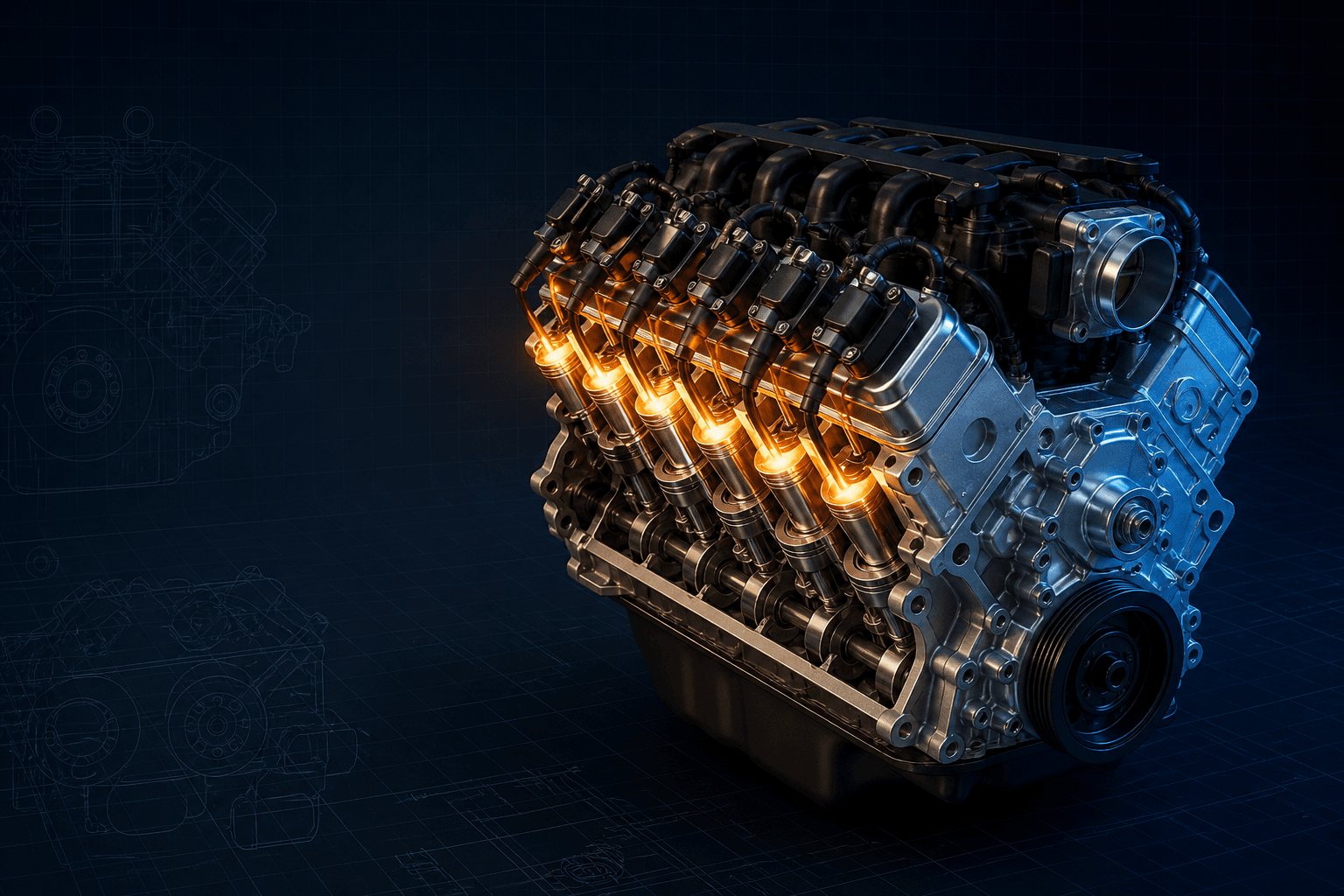
Interactive 1993 F-150 5.8L/351W V8 head service map
Branded downloads includedPNG and PDF exports carry the TorqueSheet logo, torquesheet.com, source-page URL, and republishing attribution request. The PDF source link is clickable.
Use the numbered map as an orientation aid only. The application-specific service diagram controls the actual bolt positions and stages.
Ford 351 Windsor Head Bolt Torque Sequence
| APPLICATION / ITEM | SPECIFICATION | NOTES |
|---|---|---|
| Pass 1 | 85 lb-ft | 115 N·m |
| Pass 2 | 95 lb-ft | 129 N·m |
| Final pass | 105–112 lb-ft | 143–151 N·m |
| Other 351 families | Different procedure | Identify 351W first |
Complete every Ford sequence pass before increasing torque. Do not substitute the lower 5.0L/302 values merely because both engines belong to the Windsor family.
How to use this specification correctly
- 01
Identify the engine code, model year, casting, gasket and exact fastener kit before disassembly.
- 02
Clean and inspect threads, bolt holes and mating faces using the component manufacturer's limits.
- 03
Follow the exact staged pattern with the specified lubricant or sealant; record torque and angle completion.
The covered 1993 351W three-pass procedure
Run the complete Ford pattern at 85 lb-ft, repeat it at 95 lb-ft, and finish every position at 105–112 lb-ft. Progressive passes distribute load across the long Windsor head before the final range is reached.
Do not borrow the 5.0L/302 chart. Although both are Windsor-family engines, Ford publishes materially different head-bolt values for the 5.8L truck application.
Keep other 351 families out of the chart
A 351 Cleveland and 351M/400 use different architecture; displacement alone is not identification. Verify block and head casting, model year and bolt set before assembly.
Aftermarket aluminum heads and studs use their manufacturers' lubricant, washer and torque procedure. A factory wrench value cannot be separated from its specified friction condition.
Why 1993 F-150 5.8L/351W V8 identification changes the specification
The numerical stages apply to the documented 1993 truck 351W with production-style iron heads and bolts. 351 Cleveland, 351M/400, aluminum heads and stud kits are separate applications.
Complete every Ford sequence pass before increasing torque. Do not substitute the lower 5.0L/302 values merely because both engines belong to the Windsor family.
Assembly controls that prevent false torque
- Use the specified thread condition and lubricant.
- Separate main bolts from small or special-position fasteners.
- Use an angle gauge where torque-to-yield stages are specified.
- Stop if a fastener reaches the setting before the joint seats normally.
Ford 1993 F-150 5.8L/351W V8 specifications can change by model year, engine, platform, wheel, and installed component. Confirm the VIN or engine identity, part numbers, fastener condition, and the current manufacturer instructions before service.
Ford 351 Windsor Head Bolt Torque Sequence Guide FAQs
What are the 1993 Ford 351W head-bolt stages?+
The covered F-150 5.8L procedure uses 85 lb-ft, 95 lb-ft, then 105–112 lb-ft in sequence.
Can I use Ford 302 head-bolt torque on a 351W?+
No. The cited Ford data publishes a separate, higher three-pass chart for the 5.8L Windsor.
Does this chart cover a 351 Cleveland?+
No. The 351C is a different engine family and needs its own procedure.
Do aluminum heads or studs use 105–112 lb-ft?+
Not automatically. Follow the exact head and fastener manufacturers' instructions.
Technical sources
TorqueSheet favors engine- and component-specific manufacturer instructions over unsourced universal values.
1Ford owner manualsOfficial Ford year/VIN manual lookup.↗