Dodge Ram 5.7 HEMI Starter Wiring: Battery, Relay and Solenoid Map
Dodge/Ram 5.7 HEMI starter wiring guide covering battery B+ cable, starter solenoid control, fuse/relay/module start authorization, transmission range.
A Ram 5.7 HEMI starter has a high-current battery-positive connection and a smaller solenoid-control connection. The control side is supplied through the vehicle's fuse/relay and start-authorization logic, which can include the ignition switch or start button, RF hub/WIN/BCM depending on year, PCM, transmission range and security conditions. The starter case returns current through the engine block and battery-negative path. Do not jump the small terminal to battery power or replace a relay until the exact year, platform (DS/DT/DJ) and power-distribution diagram is identified.
A modern Ram no-crank can be caused by a weak high-current cable, a failed starter, a missing Park/Neutral input, an invalid key/start request, a module communication problem or an open relay-control circuit. Replacing the starter because the engine does not turn—or jumping the solenoid because the relay does not click—skips most of that system.
Ram's 2021 DT owner manual describes controlled cranking and limits starter operation, while Mopar's parts catalog separates the starter, heat shield and application-specific battery/alternator/starter cable assemblies. These official sources support a system map, but not a single color-coded diagram for every 5.7 truck year.
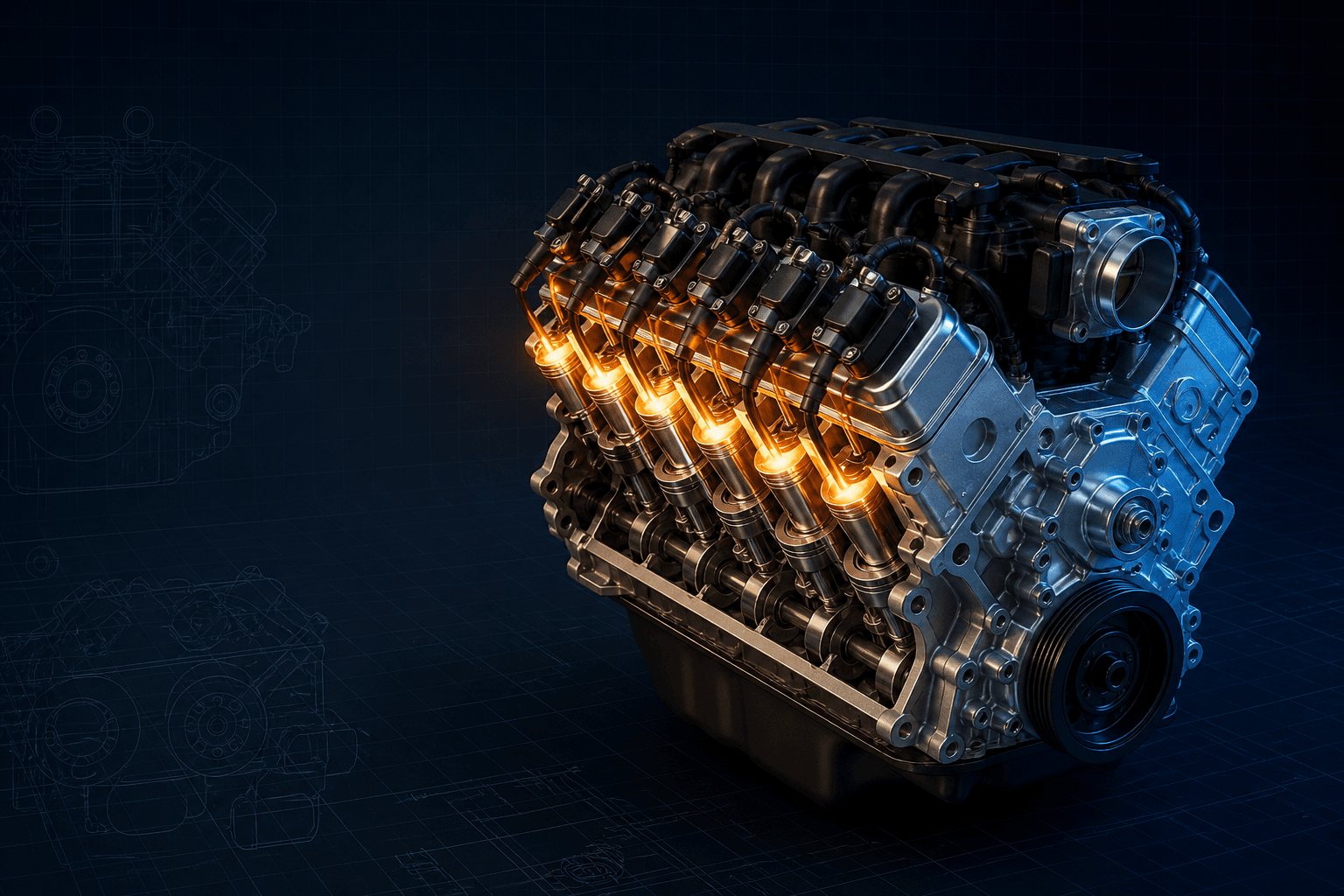
Interactive Ram 5.7 starter authorization map
Branded downloads includedPNG and PDF exports carry the TorqueSheet logo, torquesheet.com, source-page URL, and republishing attribution request. The PDF source link is clickable.
Select DS, DT or heavy-duty year first. This functional map deliberately omits universal relay cavity and PCM pin claims.
Dodge Ram 5.7 Hemi Starter Wiring Diagram
| APPLICATION / ITEM | SPECIFICATION | NOTES |
|---|---|---|
| High-current path | Battery B+ -> starter battery terminal | Cable assembly and junctions vary by platform |
| Control path | Authorized starter-relay output -> solenoid terminal | Not a universal direct ignition-switch wire |
| Enable inputs | Start request + Park/Neutral + security/module logic | Architecture changes by year |
| Ground return | Starter case -> block -> battery negative | Include engine/body straps and IBS-aware battery work |
| Heat protection | Factory starter shield/routing | Mopar catalogs an application-specific shield |
The 5.7 HEMI appeared in Dodge Ram and later Ram-branded trucks across multiple electrical generations. Early keyed trucks, TIPM-era trucks, heavy-duty models and 2019-new-body DT trucks do not share one relay location, fuse number, connector color or module logic. eTorque/BSG models also add a separate belt-starter-generator system without eliminating the need to identify the conventional starter circuit correctly.
How to use this specification correctly
- 01
Record VIN, model year, DS/DT/DJ platform, 1500/2500/3500 series, 5.7 engine sales code, eTorque status and ignition/start-button type.
- 02
Read all modules for codes and note security, transmission-range, start-request and starter-relay command data before disconnecting power.
- 03
Use the VIN-year power-distribution and starting-system diagrams to identify fuse, relay or integrated TIPM/PDC function and connector views.
- 04
Verify battery condition and follow the battery-sensor/IBS disconnect procedure when fitted; do not bypass the sensor with an improvised ground path.
- 05
Test high-current positive and ground voltage drop during the failed crank attempt, then test the small solenoid terminal only with the specified backprobe method.
- 06
Inspect cable routing, terminal boots, starter shield, exhaust clearance, engine grounds and harness clips before replacing parts.
- 07
After repair, confirm Park and Neutral behavior, key/start-button operation and immediate starter disengagement; clear and recheck all relevant codes.
High-current battery circuit
The starter's large stud receives battery positive through a heavy cable or integrated cable assembly. Mopar catalogs show that later Ram cable assemblies can combine battery, alternator and starter distribution and may include high-current fuse/junction hardware.
A connection can show battery voltage with no load yet collapse during cranking. Measure voltage drop end-to-end while the starter is commanded, and inspect hidden corrosion, overheated ring terminals and loose protective boots.
Start authorization and relay control
The driver creates a start request, but modules determine whether to energize the starter relay/solenoid circuit after checking conditions such as transmission range and valid security state. The exact chain changes among keyed, WIN/TIPM and newer RF-hub/BCM architectures.
A scan tool showing the start request but no authorized relay command directs diagnosis differently from a command present with no voltage at the solenoid. Use data and circuit tests together rather than bypassing logic.
DS, DT and heavy-duty boundaries
The fourth-generation DS 1500 continued alongside the fifth-generation DT beginning in the 2019 model year, while heavy-duty DJ/D2 trucks use their own power-distribution layouts. Searching only '2019 Ram 5.7 starter relay' can therefore return two legitimate but incompatible answers.
Confirm body/platform by VIN and physical power-distribution center before using a fuse chart. Mopar part catalogs also show multiple harness part numbers for one apparent model year based on equipment and production date.
eTorque caution
A 5.7 eTorque truck has a belt-driven motor-generator and 48-volt battery system supporting stop/start and torque assist. That system adds high-voltage isolation and service precautions; it does not authorize treating orange/high-voltage or BSG cables as conventional starter wiring.
Follow the Ram high-voltage disable procedure before work within that system. A conventional no-crank diagnosis must still distinguish the 12-volt battery, starter, module authorization and BSG-related faults using the exact manual.
No-crank evidence checklist
- Battery open-circuit and loaded state, including IBS-related history.
- Start request recognized by the responsible module.
- Park/Neutral status agrees with actual shifter position.
- Security/key authorization is valid.
- Starter relay command and relay output are distinguished.
- Voltage reaches the solenoid control terminal during the command.
- Positive and negative high-current voltage drops are within the manual limits.
- Starter current and engine mechanical freedom are checked before condemnation.
Editorial verification status
TorqueSheet has anchored the later DT operating behavior and physical starter/cable components to Ram/Mopar sources. This multi-generation page remains indexable but visibly limited until separate factory circuits are attached for representative DS, DT and heavy-duty 5.7L applications.
Ram 1500/2500/3500 with 5.7L HEMI specifications can change by model year, engine, platform, wheel, and installed component. Confirm the VIN or engine identity, part numbers, fastener condition, and the current manufacturer instructions before service.
Dodge Ram 5.7 HEMI Starter Wiring: Battery, Relay and Solenoid Map FAQs
Where is the Ram 5.7 starter relay?+
It depends on year and platform and may be serviceable or integrated into the power-distribution architecture. Use the VIN-year fuse/relay diagram.
Can I jump the starter solenoid to test it?+
That can bypass interlocks, create arcing and move the truck unexpectedly. Use the factory controlled test procedure with the vehicle secured.
Why does the truck start in Neutral but not Park?+
A transmission-range input, shifter adjustment or related wiring fault is possible; confirm scan data and the exact circuit.
Does eTorque replace the normal starter?+
It adds a 48-volt belt-starter-generator system, but diagnosis still requires the exact vehicle architecture and conventional start-circuit identification.
What if the relay clicks but the starter does not crank?+
Test relay output, solenoid control voltage, battery cable drop, engine-ground drop and starter current under load.
Technical sources
TorqueSheet favors engine- and component-specific manufacturer instructions over unsourced universal values.
12021 Ram 1500 Owner's Manual - starting system operationRam documents controlled starter operation and gasoline-engine crank-time limits for the DT platform, showing that the start request is managed rather than a simple direct key-to-solenoid wire.↗2Mopar 2022 Ram 1500 starter catalogMopar identifies the VIN-configured 5.7L starter, mounting hardware and starter heat shield for a defined Ram application.↗3Mopar 2022 Ram 1500 battery/alternator/starter cable catalogMopar lists integrated battery, alternator and starter cable assemblies plus the intelligent battery sensor, demonstrating application-specific high-current distribution.↗