Ford 7.3 Power Stroke Fuel System Diagram: OBS vs. Super Duty
7.3 Power Stroke fuel-flow diagram separating 1994.5–1997 mechanical-pump trucks from 1999–2003 electric-pump systems, including filter bowl, head galleries.
The 7.3L Power Stroke has two major chassis-era fuel paths. Most 1994.5–1997 Ford trucks use a cam-driven mechanical lift pump that feeds the engine-mounted filter bowl. Most 1999–2003 Super Duty applications use an electric frame-mounted pump feeding the filter bowl. From the bowl, conditioned fuel enters galleries in both cylinder heads, supplies the HEUI injectors, passes through pressure regulation, and returns toward the tank.
A single 7.3 Power Stroke fuel diagram can be misleading because the OBS and Super Duty chassis use different supply-pump arrangements. Both ultimately feed an engine-mounted filter/water-separator and the cylinder-head galleries, but diagnosis begins in a different place depending on the truck.
The diagram deliberately separates fuel from high-pressure oil. Diesel fuel fills the injector's fuel cavity, while high-pressure engine oil moves the injector intensifier piston. Low fuel supply and low injection-control pressure can produce overlapping symptoms, so the two circuits must be tested independently.
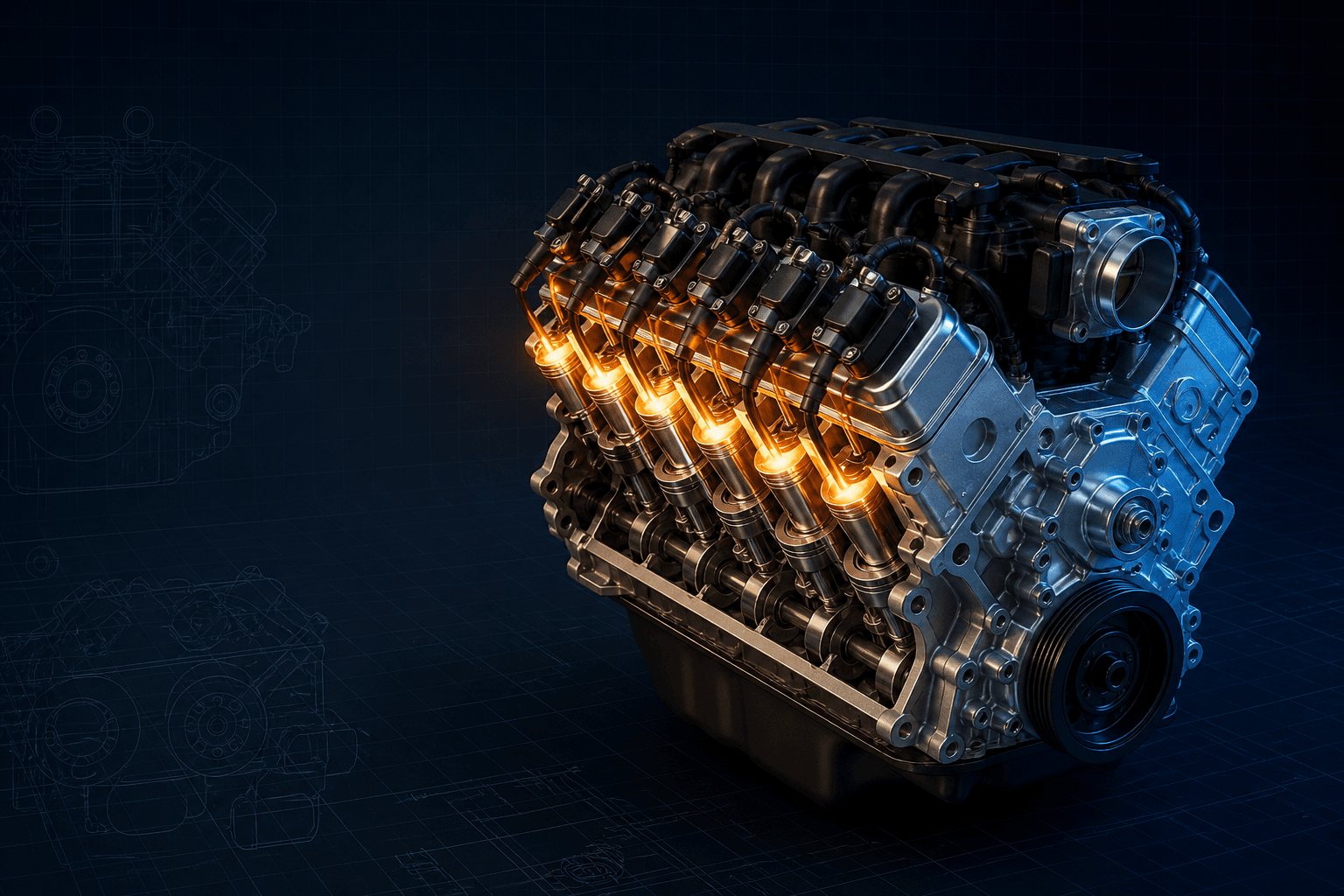
Interactive stock 7.3L fuel-flow diagram
Branded downloads includedPNG and PDF exports carry the TorqueSheet logo, torquesheet.com, source-page URL, and republishing attribution request. The PDF source link is clickable.
Select the supply-pump branch that matches the truck, then follow the shared engine-side path. This is not an electrical connector or hose-location drawing.
Ford 7.3 Powerstroke Fuel System Diagram
| APPLICATION / ITEM | SPECIFICATION | NOTES |
|---|---|---|
| 1994.5–1997 supply pump | Cam-driven mechanical | OBS truck configuration; verify chassis |
| 1999–2003 supply pump | Electric frame-mounted | Common Super Duty configuration |
| Primary conditioning | Filter bowl / water separator | Engine-mounted service point |
| Injector supply | Cylinder-head fuel galleries | One gallery per bank |
| Return control | Pressure regulator and return | Stock routing differs from aftermarket regulated-return kits |
This is the low-pressure diesel-fuel circuit. The separate high-pressure oil system hydraulically actuates the injectors; it does not send diesel fuel through the HPOP. Dual-tank routing, E-Series packaging, California calibrations, and aftermarket regulated-return systems can alter the external plumbing.
How to use this specification correctly
- 01
Confirm the model year, chassis, build date, single- or dual-tank configuration, and whether the fuel system is still stock.
- 02
Inspect the selected tank pickup, selector valve where equipped, supply lines, pump arrangement, filter bowl, drain valve, and return plumbing for leakage or restriction.
- 03
Drain the separator into a suitable clear container and inspect for water or contamination using Ford's procedure; contain diesel fuel safely.
- 04
Replace the filter with the correct element and seal, clean the housing mating surfaces, and prevent debris from entering the clean side.
- 05
Prime or purge air according to the exact vehicle procedure, then check for leaks and verify fuel pressure with the specified adapter and test condition before condemning injectors.
1994.5–1997 OBS fuel path
On the common OBS light-truck arrangement, fuel leaves the selected tank and reaches a two-stage mechanical lift pump in the engine valley. The pump sends fuel to the filter bowl/water separator, after which engine passages distribute it to the cylinder-head galleries and injectors.
Dual-tank trucks add pickup and selector components ahead of the pump. A problem that occurs on only one selected tank should therefore be separated from an engine-side filter, regulator, or injector issue before parts are replaced.
1999–2003 Super Duty fuel path
The common Super Duty arrangement moves the supply function to an electric pump mounted along the frame. The pump pushes fuel forward to the engine-mounted filter bowl. From there the engine-side path supplies both head galleries and returns regulated fuel through the stock return circuit.
A silent or electrically inactive pump, restricted pickup, air leak, contaminated filter, damaged bowl seal, regulator problem, or modified return system can each change pressure and flow. Verify electrical command and actual hydraulic delivery separately.
Filter bowl and water separator
Ford places the replaceable filter and water-separation service point in the engine compartment. The filter must be fully installed with the correct gasket so fuel cannot bypass or leak. The drain valve is a service component, not a pressure-test port.
Water, gasoline contamination, microbial debris, tank lining, rust, and deteriorated hoses can quickly damage injector components. If contamination is found, repairing only the filter bowl leaves the source in the tank or lines.
Stock return versus aftermarket regulated return
- A stock diagram should not be used to identify hose positions after a regulated-return conversion.
- Record regulator brand, gauge location, check valves, pump, filters, and tank return before diagnosis.
- Do not assume an aftermarket gauge is accurate or installed at the same reference point as Ford's test.
- Restore safe hose support and heat clearance after any inspection.
Fuel-system safety
- Work away from flame, hot exhaust, sparks, and smoking materials.
- Relieve pressure and capture fuel before opening a connection.
- Wear eye protection and fuel-resistant gloves.
- Clean around every fitting before disassembly.
- Dispose of contaminated diesel and filters according to local requirements.
Ford 7.3L Power Stroke specifications can change by model year, engine, platform, wheel, and installed component. Confirm the VIN or engine identity, part numbers, fastener condition, and the current manufacturer instructions before service.
Ford 7.3 Power Stroke Fuel System Diagram: OBS vs. Super Duty FAQs
Does every 7.3 Power Stroke use an electric fuel pump?+
No. Most 1994.5–1997 OBS Ford truck applications use a cam-driven mechanical supply pump, while most 1999–2003 Super Duty applications use an electric frame-mounted pump.
Does the HPOP pump diesel fuel?+
No. The HPOP pumps engine oil for hydraulic injector actuation. A separate low-pressure circuit supplies diesel fuel to the injectors.
Where is the 7.3 Power Stroke fuel filter?+
Ford's stock engine-mounted filter/water-separator housing is in the engine compartment. Exact access and orientation vary by chassis.
Why does the truck run differently on its two tanks?+
A tank-specific pickup, contamination, selector valve, or supply-line problem can affect only one tank. Diagnose the tank-side path before blaming shared engine components.
Can I use this diagram after a regulated-return conversion?+
Only for the basic injector-supply concept. Hose routing, regulation, filtration, check valves, and return points must come from the exact conversion manufacturer.
Technical sources
TorqueSheet favors engine- and component-specific manufacturer instructions over unsourced universal values.
11997 Ford 7.3L DIT maintenance guideFord's maintenance schedule identifies the 7.3L DIT fuel-filter service requirement for the OBS-era system.↗21999 Ford 7.3L Power Stroke Owner Guide SupplementFord's dedicated 7.3L DIT supplement covers fuel quality, water separation, filter service, and system operation cautions.↗32001 Ford F-650/F-750 Owner Guide — 7.3L fuel filterFord documents the engine-mounted fuel-filter/water-separator housing, service method, and contamination precautions.↗