Ford 302 PCV Valve Routing Diagram: Carbureted vs. EFI
Ford 302/5.0 PCV routing diagram separating carbureted valve-cover systems from EFI rear-lower-intake routing, fresh-air inlet, manifold vacuum.
A Ford 302 PCV system needs two paths: filtered fresh air enters the crankcase at a breather or oil-fill connection, and crankcase vapor leaves through a metered PCV valve to full intake-manifold vacuum. On many EFI 5.0L engines, the PCV valve and separator screen sit in a grommet at the rear of the lower intake manifold; on many carbureted 302s, the valve is in a valve-cover grommet and connects to a carburetor-base or manifold-vacuum port.
PCV is a controlled air circuit, not a single hose. Manifold vacuum draws blow-by vapor from the crankcase through a calibrated valve. Replacement air must enter through a filtered path at the opposite cover or oil-fill connection. Blocking the inlet can increase crankcase vacuum and oil draw; leaving it open on a MAF system can bypass the airflow meter.
Ford used the 302 in carbureted cars and trucks, sequential-EFI Mustangs, speed-density and MAF systems, Explorers and countless swaps. The hose endpoints—not a remembered left/right valve-cover position—identify correct routing. One endpoint must be a filtered fresh-air source, and the metered outlet must reach full manifold vacuum through the PCV valve.
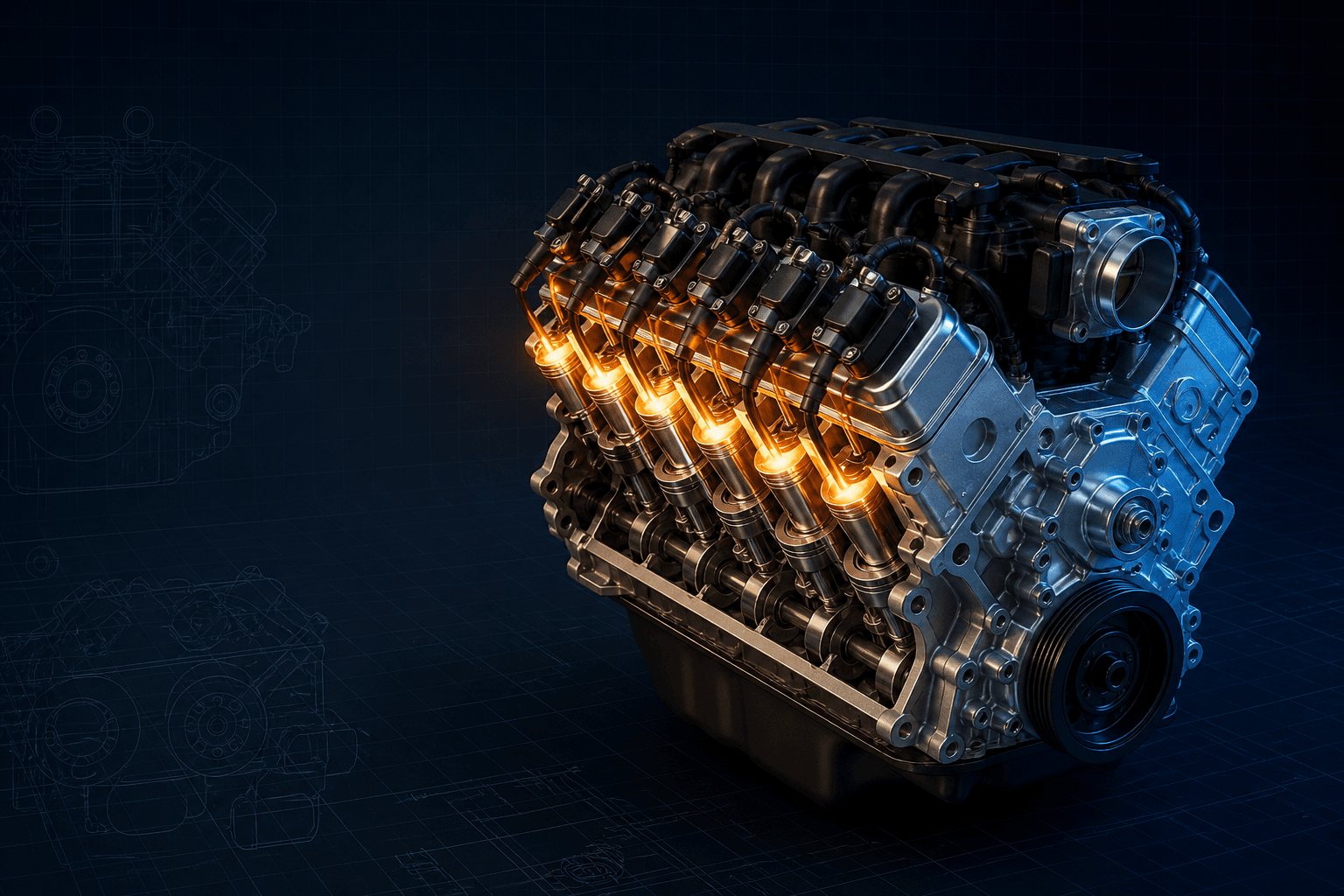
Interactive Ford 302 PCV route selector
Branded downloads includedPNG and PDF exports carry the TorqueSheet logo, torquesheet.com, source-page URL, and republishing attribution request. The PDF source link is clickable.
Choose carbureted or EFI hardware first. The arrows show normal light-load flow; wide-open-throttle pressure behavior and boosted systems require additional controls.
Ford 302 PCV Valve Routing Diagram
| APPLICATION / ITEM | SPECIFICATION | NOTES |
|---|---|---|
| Vapor outlet | PCV valve → manifold vacuum | Use a full-vacuum PCV-sized port |
| Fresh-air inlet | Filtered air → opposite crankcase opening | Must be metered on MAF EFI systems |
| Common EFI valve location | Rear of lower intake | Grommet and separator screen beneath valve |
| Common carbureted location | Valve-cover grommet | Location can swap sides if flow remains correct |
| Flow direction | Fresh air through crankcase to PCV | Both ends are required for controlled ventilation |
Do not connect the PCV outlet to a timed/ported vacuum nipple. On a MAF-equipped EFI engine, the fresh-air inlet must come from the clean, metered side of the inlet tract; an open breather or split PCV hose can add unmetered air and create lean codes or idle problems.
How to use this specification correctly
- 01
Identify year, donor vehicle, intake manifold, carburetor or EFI system, and whether the induction uses a MAF sensor.
- 02
Find the actual PCV valve. On EFI lower intakes, remove it only after cleaning the area and inspect the grommet and separator screen below.
- 03
Trace the outlet hose to a dedicated full-manifold-vacuum connection sized for PCV flow; do not tee it casually into a small control line.
- 04
Trace the opposite fresh-air opening to the air cleaner or clean-side inlet tube. On MAF systems it must be downstream of the meter but upstream of the throttle.
- 05
Cap abandoned ports with fuel/oil/vacuum-rated caps and verify there is no open crankcase nipple, cracked elbow or collapsed hose.
- 06
After service, check idle trims, crankcase pressure/vacuum, oil leaks and smoke rather than judging the system only by whether the valve rattles.
Carbureted 302 routing
A common carbureted arrangement places a PCV valve in one valve-cover grommet and runs its hose to a large full-vacuum nipple at the carburetor base or intake manifold. The other cover uses a filtered breather, often connected to the air-cleaner housing.
The sides can be reversed if the covers, baffles and ports support it. What matters is that filtered air crosses the crankcase and vapor exits through the metering valve. A plain open breather may vent odor and hydrocarbons and may not comply with the vehicle's original emissions design.
EFI 5.0L rear-intake routing
Many EFI 5.0L lower manifolds place the PCV valve vertically at the rear of the intake valley. A mesh separator screen below the grommet helps strip oil mist before vapor enters the valve. Sludge can restrict the screen even when the valve itself is new.
The outlet hose routes to manifold vacuum on the upper-intake/plenum system. Because packaging is tight behind the intake, elbows harden and split where the damage is difficult to see. Smoke testing with appropriate pressure limits is more reliable than spraying flammable cleaner around the engine.
Fresh-air route on MAF EFI
The clean-side hose normally connects the oil-fill/valve-cover fitting to the inlet tube after the MAF sensor and before the throttle body. Air entering there has already been measured, then crosses the crankcase and reaches the manifold through the PCV valve.
Replacing that closed connection with an open breather allows air to enter without passing the MAF. Ford's OBD description notes that a disconnected PCV path on a MAF vehicle can cause a large vacuum leak and lean operation.
Symptoms by failure type
- Split outlet hose: high idle, lean trims/codes, whistle or oil odor.
- Restricted valve/screen: crankcase pressure, seal leakage and sludge.
- Wrong high-flow valve: excess oil ingestion or unstable idle.
- Blocked fresh-air inlet: abnormal crankcase vacuum and oil pull-over.
- Open breather on MAF EFI: unmetered air and fuel-trim error.
- Missing valve-cover baffle: liquid oil drawn into the intake.
Ford 302 / 5.0L Windsor specifications can change by model year, engine, platform, wheel, and installed component. Confirm the VIN or engine identity, part numbers, fastener condition, and the current manufacturer instructions before service.
Ford 302 PCV Valve Routing Diagram: Carbureted vs. EFI FAQs
Where is the PCV valve on an EFI Ford 5.0?+
On many 1980s–1990s EFI 5.0L engines it is in a grommet at the rear of the lower intake manifold, beneath the upper intake area. Verify the exact application.
Where does a Ford 302 PCV hose connect?+
The valve outlet connects to a full intake-manifold-vacuum port. The opposite crankcase opening connects to filtered fresh air.
Can I connect the PCV valve to ported vacuum?+
No. PCV requires the application-designated full-manifold-vacuum source, not a spark-advance port that has little or no idle vacuum.
Does an EFI 5.0 need the screen under the PCV valve?+
Applications designed with the separator screen should retain the correct clean screen and grommet; a restricted or missing separator changes oil control and flow.
Can I use an open breather with a MAF sensor?+
Not in place of the designed clean-side hose. It can admit unmetered air. Use a closed, sealed route compatible with the calibration.
Technical sources
TorqueSheet favors engine- and component-specific manufacturer instructions over unsourced universal values.
1Ford OBD System Operation — PCV monitor descriptionFord explains the closed PCV path to intake-manifold vacuum and warns that a disconnected PCV hose becomes a major unmetered-air leak on MAF-equipped vehicles.↗21998 Ford Explorer Owner Guide — 5.0L PCV service listingFord's 5.0L owner guide identifies the PCV valve as an application-specific emissions/service component.↗