Ford 4.6 Timing Chain Marks: Identify 2V, 3V or 4V Before Alignment
Ford 4.6 timing-chain guide explaining the different 2V, 3V and 4V layouts, colored-link alignment, crank reference, cam phasers, primary and secondary chains.
There is no single Ford 4.6 V8 timing-mark diagram. A 2-valve SOHC 4.6 uses two primary chains, one from the crankshaft to each camshaft. A 3-valve SOHC engine also has bank-specific primary chains but adds variable-cam-timing phasers and a different holding/alignment procedure. A 4-valve DOHC engine uses two primary chains plus two secondary chains to time four camshafts. Identify the engine by VIN, model year, cylinder-head/cam-cover architecture and service-manual application before placing any colored link or releasing a tensioner.
Searching for Ford 4.6 timing marks often mixes three engines that share displacement but not valvetrain architecture. Crown Victoria, Grand Marquis, Town Car, Mustang, F-Series, Expedition and other applications used different 2-valve, 3-valve or 4-valve versions over time. The front cover may look familiar while the sprockets, phasers, chain count and required holding tools are different.
The safest starting point is identification, not top dead center. Record the VIN engine code, vehicle year, build date and cylinder-head configuration, then obtain the matching Ford workshop procedure. Ford Performance's own instructions demonstrate the divide: its 2V kit describes two primary chains and a crank-keyway reference, while its 4V kit lists primary and secondary chains, four cam sprockets and a special-tool sequence.
This page teaches what to inspect and how to avoid common assembly errors. It deliberately does not publish a universal tooth-count shortcut, because a shortcut correct for one modular head can bend valves on another.
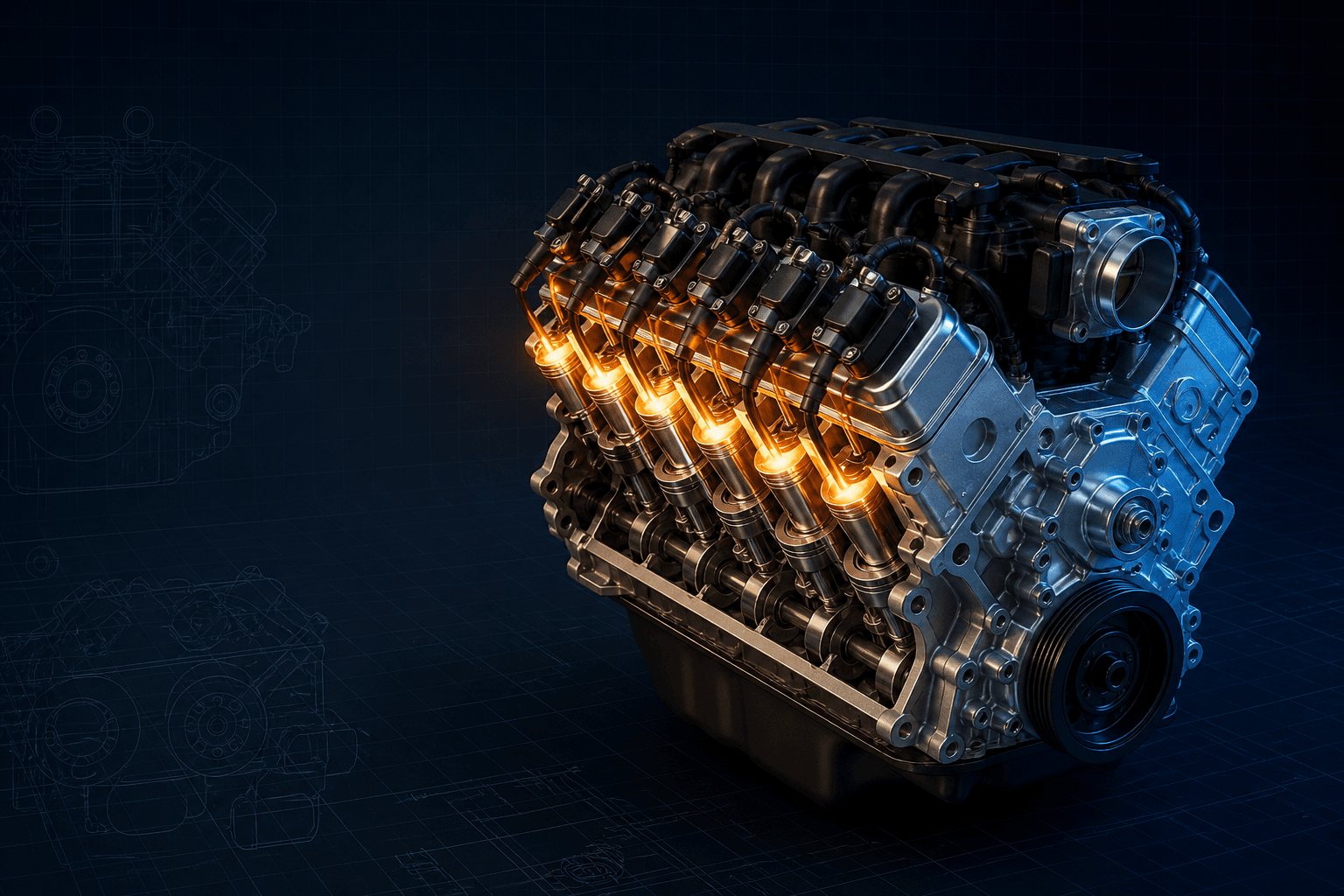
Interactive Ford 4.6 timing-system architecture map
Branded downloads includedPNG and PDF exports carry the TorqueSheet logo, torquesheet.com, source-page URL, and republishing attribution request. The PDF source link is clickable.
Choose the correct valve-count architecture before using timing marks. This functional map does not claim that one sprocket position fits all 4.6L engines.
Ford 4.6 V8 Timing Chain Marks Diagram
| APPLICATION / ITEM | SPECIFICATION | NOTES |
|---|---|---|
| 4.6L 2V SOHC | 2 primary chains; 1 camshaft per bank | Ford kit M-6004-462V; crank keyway at 9 o'clock for documented procedure |
| 4.6L 3V SOHC | 2 bank chains with VCT cam phasers | 2005-2010 Ford Performance kit application; use exact vehicle procedure |
| 4.6L 4V DOHC | 2 primary + 2 secondary chains; 4 camshafts | Cam holding and follower-removal steps are part of Ford procedure |
| Colored links | Assembly alignment references | Their colors and link counts must match the selected chain/procedure |
| Final proof | Hand-rotate and recheck mechanical timing | Stop immediately if resistance suggests contact |
For the Ford Performance 4.6L 2V procedure, removal and installation of the gears and chains is performed with the crankshaft keyway at the 9 o'clock position. Ford's 4V instructions instead show a multi-stage primary/secondary-chain procedure, require the cam followers removed during gear-and-chain installation, use a cam-holding tool, and warn that incorrect timing can damage valves and pistons. Those instructions cannot be combined into one universal overlay. Colored chain links are assembly references; after the crankshaft is rotated, they normally will not remain beside the sprocket marks on every revolution.
How to use this specification correctly
- 01
Decode the exact vehicle and engine. Confirm 2V SOHC, 3V SOHC with VCT phasers, or 4V DOHC from service information and visible hardware; do not rely only on the 4.6L badge.
- 02
Obtain the Ford workshop procedure for the VIN/build date and the instructions supplied with the exact timing set. Compare guide, tensioner, sprocket, trigger-wheel and chain part numbers before disassembly.
- 03
Disconnect the battery, remove covers and accessories as directed, and clean the work area so debris cannot enter the oil pan or tensioner oil passages.
- 04
Position the crankshaft exactly as the selected procedure requires before unloading tensioners. For the cited Ford 2V kit procedure that means crank keyway at 9 o'clock; do not transfer this statement to a different procedure automatically.
- 05
Lock or hold camshafts with the specified tools and remove followers if the procedure requires it. Never use the timing chain alone to resist cam-sprocket bolt torque.
- 06
Install chains with their designated colored links aligned to the identified crank and cam/phaser timing marks. Keep the drive side taut while the guide/tensioner side receives slack.
- 07
Install guides, arms and compressed/pinned tensioners in the specified order. Confirm every mark and trigger-wheel orientation before releasing tensioners.
- 08
Rotate the crankshaft by hand in its normal direction for the number of revolutions in the workshop procedure. If it stops unexpectedly, do not force it; return to the timing check.
- 09
Recheck crank-to-cam mechanical references and, where specified, cam-tool fit. Do not expect colored links to realign after only two crank revolutions.
- 10
Complete cover sealing, fastener torque/angle, oil priming and startup checks using the application procedure; scan VCT-capable engines for correlation faults and observe oil pressure and abnormal noise.
How to identify a 2V, 3V or 4V 4.6L
A 2V engine is single-overhead-cam with one camshaft per cylinder bank and no 3V-style cam phaser. Its timing set has a crank sprocket, two long primary chains, two cam sprockets, bank-specific guides and hydraulic tensioners. Ford's M-6004-462V instructions cover the replacement architecture but also flag an early-engine guide-dowel modification, showing why even 2V years are not automatically identical.
A 3V engine remains SOHC but uses variable cam timing. Large phaser assemblies replace ordinary fixed cam sprockets, and service may require crank and phaser holding tools plus phaser/oil-control checks. Ford lists its 4.6L 3V camshaft-drive kit for 2005-2010 engines, but the vehicle workshop manual still controls the installation.
A 4V engine has two camshafts per bank. Ford's 4V kit lists two primary chains, two secondary chains, four cam sprockets and secondary tensioners. If four camshafts are visible, a two-chain 2V graphic is not usable.
What the colored links actually do
Copper, brass or otherwise colored links provide references for initial assembly. Each designated link is placed beside a specific mark on the crank sprocket, cam sprocket or phaser according to the selected procedure. Some replacement chains use different colors or require the installer to mark links when factory-colored links are not visible.
The links are not permanent running timing indicators. Because the chain length and sprocket tooth counts do not bring every marked link back to every timing mark after one or two crank rotations, judging a completed engine only by link color can create a false failure. Verify the mechanical crank/cam relationship and tool fit as Ford specifies.
Bank orientation and viewpoint
Ford service literature uses left-hand and right-hand as viewed from the driver's seat, while a technician standing in front of the engine sees those sides reversed. Mark the vehicle's LH and RH banks before parts are removed and keep chains, guides, arms and tensioners organized by side.
A mirrored internet diagram is especially dangerous because a guide can appear to fit the opposite bank. Match molded part numbers, oil-feed openings, dowel locations and manual illustrations rather than shape alone.
Why the crank reference matters
Moving the crankshaft away from the procedure's safe reference while chains are off can place pistons near open valves. Ford's cited 2V instruction explicitly requires the crank keyway at 9 o'clock for gear-and-chain removal and installation. That is a controlled service position, not a generic claim that every engine should be timed by pointing the keyway at 9 o'clock.
The 4V instruction adds another protection: gear-and-chain installation is performed with the cam followers removed, then the followers are installed after timing is established. It warns that failure to follow the timing procedure can cause piston-to-valve damage.
Tensioners, oil pressure and startup
Hydraulic chain tensioners must be compressed, retained and released by the correct method. Ford's 4V instructions distinguish non-ratcheting and ratcheting tensioners, so a generic bench-compression technique is not enough. Inspect guide faces, tensioner arms and oil feeds, and never install a tensioner packed with contamination.
After assembly, build oil pressure as the service procedure allows before normal startup. A brief dry rattle, persistent front-cover noise, VCT error or cam/crank correlation code deserves immediate investigation. Ford's 3V noise bulletin also cautions that not every tick or knock has the same root cause, so diagnosis should precede parts replacement.
Final verification checklist
- Engine valve count, VIN application and build date recorded
- Chain, sprocket, phaser, guide and tensioner part numbers matched
- LH/RH components kept on their correct banks
- Crankshaft positioned by the exact procedure before chain removal
- Camshafts held with specified tools; chain not used as a counterhold
- Colored links placed on the correct stamped/dimpled marks
- Trigger wheel and crank sprocket installed in the correct orientation
- Guides and tensioners installed and released in the specified order
- Engine turns smoothly by hand with no contact
- Mechanical timing/tool fit rechecked after rotation
- Oil pressure established and startup monitored for noise or correlation faults
Ford 4.6L Modular V8 - 2V, 3V and 4V specifications can change by model year, engine, platform, wheel, and installed component. Confirm the VIN or engine identity, part numbers, fastener condition, and the current manufacturer instructions before service.
Ford 4.6 Timing Chain Marks: Identify 2V, 3V or 4V Before Alignment FAQs
Are all Ford 4.6 timing marks the same?+
No. The 2V, 3V and 4V engines use different sprockets, chains and procedures. Identify the exact engine and vehicle before using a diagram.
Where should the crank keyway point on a 4.6 2V?+
Ford's cited M-6004-462V procedure requires the keyway at 9 o'clock during gear-and-chain removal and installation. Confirm that instruction applies to your exact engine and timing set.
Why do the colored chain links no longer line up after I rotate the engine?+
They are assembly references and normally do not return to all sprocket marks after only one or two crank revolutions. Verify mechanical crank/cam timing as the workshop procedure directs.
Does a Ford 4.6 4V have four timing chains?+
The Ford Performance 4V kit uses two primary chains and two secondary chains, for four chains total, to drive four camshafts.
Can I rotate the cams with the timing chains removed?+
Do not do so unless the application procedure has placed the crank and valvetrain in a safe condition and specifies the movement. Valve-to-piston contact can result.
Can I torque a cam sprocket against the timing chain?+
No. Use the specified camshaft or phaser holding tool. Loading the chain can move the timing, damage guides or stress the valvetrain.
Technical sources
TorqueSheet favors engine- and component-specific manufacturer instructions over unsourced universal values.
1Ford Performance M-6004-462V 4.6L 2V timing-kit instructionsFord's 19-page 2-valve procedure identifies the two primary chains, guides and tensioners, and requires gear-and-chain work with the crankshaft keyway at 9 o'clock.↗2Ford Performance M-6004-463V 4.6L 3V camshaft-drive kitFord identifies this camshaft-drive kit specifically for 2005-2010 4.6L 3-valve engines, establishing that the phaser-equipped 3V system is a separate application.↗3Ford Performance M-6004-A464 4.6L 4V timing-kit instructionsFord's 4-valve procedure identifies two primary and two secondary chains, four cam sprockets, special cam-holding tools and a follower-removal installation method.↗4Ford TSB 06-19-8 - 4.6L/5.4L 3V timing-area noise diagnosisFord distinguishes the 4.6L 3-valve architecture and directs technicians through application-specific diagnosis rather than treating every timing-area noise as a failed chain.↗